Understanding Piles Treatment
Understanding the symptoms, causes, and available treatment options is an important first step. Every patient is different, so the right treatment depends on individual symptoms and medical evaluation.
When Should You Consult a Doctor?
If symptoms continue, become severe, or start affecting your daily activities, it is important to consult a qualified medical professional for proper diagnosis and treatment.
The right food on your plate can be the difference between a painful setback and a speedy recovery. Here is everything your surgeon wants you to know about eating right after piles surgery — practical, evidence-backed, and tailored for Indian patients.
Why Your Diet Is as Important as Your Medication After Piles Surgery
Piles surgery — whether it is advanced laser haemorrhoid treatment, a conventional haemorrhoidectomy, stapled haemorrhoidopexy, or a minimally invasive procedure — places delicate healing tissue in one of the most mechanically active parts of your body. Every bowel movement in the weeks following surgery directly stresses the surgical site.
At Dr. Abhilash's Laparoscopy & Laser Clinics, Kondapur, Hyderabad, patients who undergo laser piles treatment are counselled on post-operative nutrition as a core part of their recovery protocol. The goal is straightforward but critical: keep stools consistently soft, reduce straining to zero, support internal tissue healing, and prevent complications like constipation, post-operative bleeding, or wound infection.
Many patients are surprised to discover that one impulsive bowl of biryani or a plate of spicy curry in week one can undo days of surgical healing. Your diet is not a temporary inconvenience — it is an active part of your treatment.
Studies show that patients who follow a structured post-operative diet after laser piles treatment report significantly lower pain scores, fewer return visits, and faster resumption of daily activity — often within 2 to 3 days for laser procedures compared to 2 to 3 weeks for traditional open surgery.
The Three Phases of Post-Surgery Nutrition
Dietary requirements after piles treatment are not static — they change week by week as your body moves through distinct stages of surgical healing. Understanding these phases prevents you from eating too restrictively for too long, or progressing too quickly and causing harm.
Phase 1 — Days 1 to 3: Liquid and Very Soft Foods
In the first 72 hours after piles surgery, the body is in the acute inflammatory healing phase. The digestive system needs minimal stimulation, and the aim is to delay the first bowel movement long enough for initial wound closure to begin. Warm, light, easily absorbed foods are your allies here.
Suitable foods during this phase include warm rice kanji (congee), coconut water, thin moong dal water, ripe mashed banana, diluted plain curd, warm vegetable broth, and barley water. A teaspoon of ghee in warm water before meals is a traditional and clinically sound method of gently lubricating the intestinal tract. Avoid cold beverages, dairy-heavy items that cause bloating, and anything requiring significant chewing or digestion effort.
Phase 2 — Days 4 to 14: Low-Residue Transition Diet
As acute inflammation subsides and the wound begins cellular repair, you can gradually introduce soft, low-residue foods. The objective now is to produce stools that are soft enough to pass without any straining — not watery enough to irritate the wound, and not firm enough to cause pain or tearing.
Excellent choices include soft idli, plain sambar without excess tamarind, well-cooked moong or masoor dal, oats porridge, boiled vegetables such as bottle gourd, pumpkin, and carrot, soft brown or white rice, and steamed fish or boiled eggs. Introduce one new food every day and observe for any gas, bloating, or discomfort before adding more.
Phase 3 — Week 3 Onwards: High-Fibre Maintenance Diet
By week three, most patients recovering from piles treatment in Hyderabad can safely transition to a full, high-fibre diet. This is the most consequential dietary shift of your recovery — because it is also the dietary pattern that prevents haemorrhoids from returning. Target 25 to 35 grams of fibre per day, progressively adding whole grains, fresh fruits with skin, cooked leafy vegetables, and legumes.
"After laser piles surgery, patients often feel much better by day two or three — and that is exactly when they make the mistake of eating normally too soon. Healing tissue inside is invisible. Just because the pain has reduced does not mean the wound is closed." — Dr. Abhilash Nali, Laparoscopy & Laser Clinics, Kondapur, Hyderabad
Best Foods to Eat — and Foods to Strictly Avoid
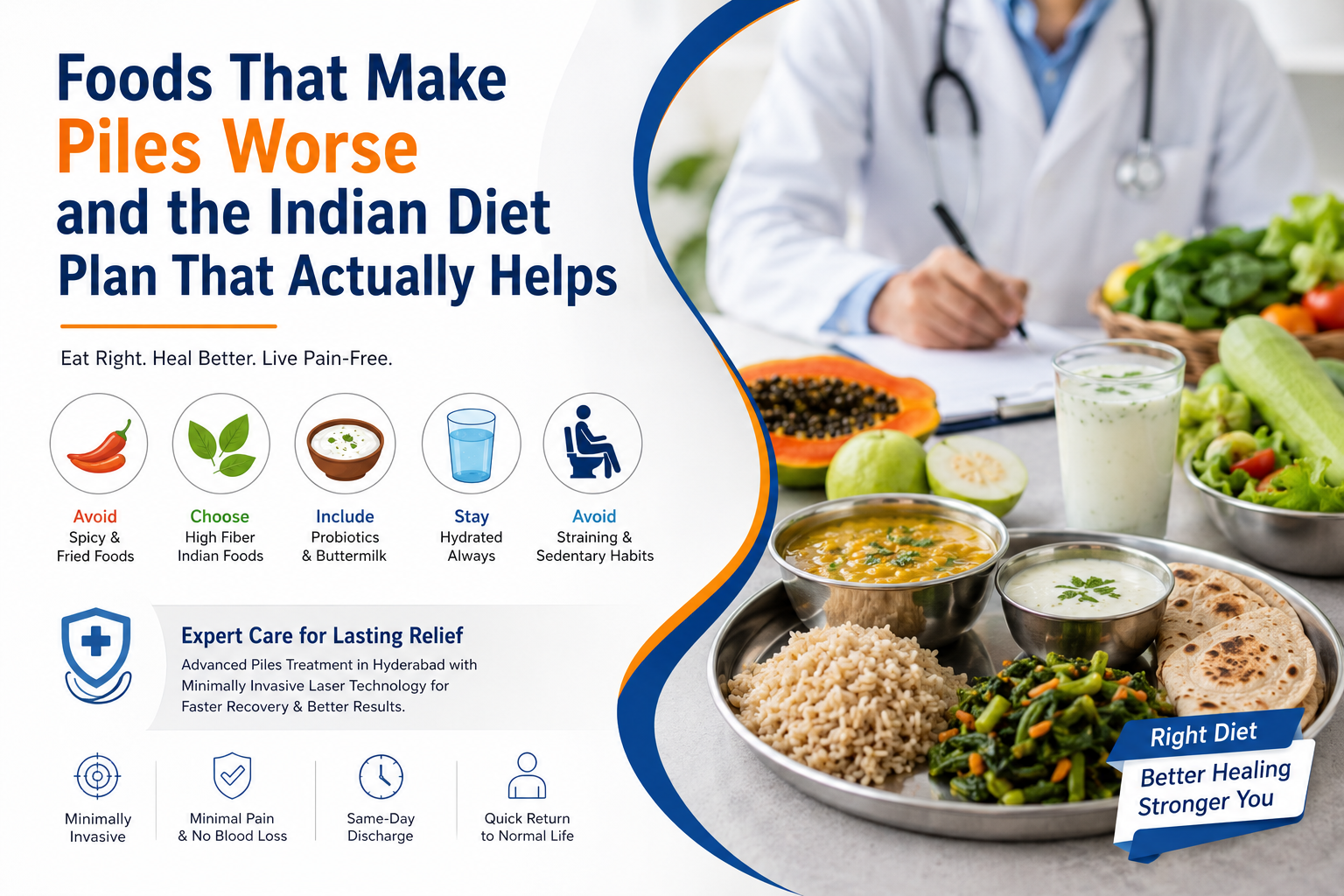
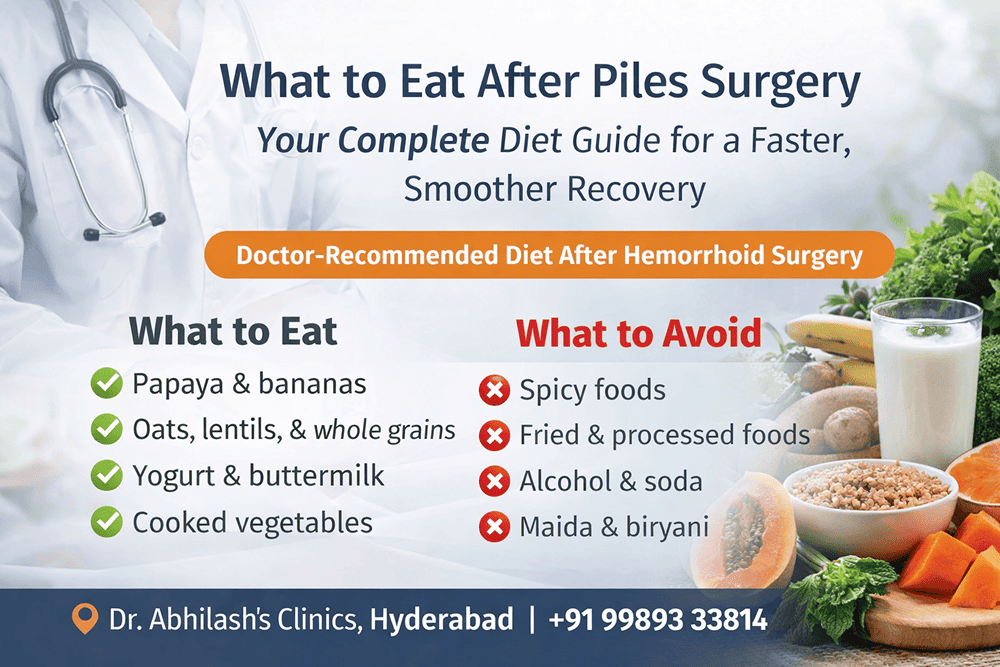
Share this with whoever cooks for you at home. These are practical, Indian-diet-specific recommendations based on what works for patients recovering from piles surgery in Hyderabad.
Foods to Eat Freely
Papaya and ripe banana
Coconut water and plain buttermilk (chaas)
Soft idli, oats porridge, daliya (broken wheat)
Moong dal and masoor dal
Boiled bottle gourd, pumpkin, and carrot
Plain curd at room temperature
Isabgol (psyllium husk) in warm water
Soaked figs and prunes
Steamed fish and soft-boiled eggs
Warm water with 1 tsp ghee
Soft brown or white rice
Ragi porridge from day 5 onwards
Foods to Avoid Completely
Spicy curries, green and red chilli in any form
Maida items — bread, parotta, naan
Alcohol and all carbonated drinks
Red meat, mutton, and all fried preparations
Pickles, chutneys, and tamarind-heavy dishes
Excess tea and coffee
Raw salads during the first two weeks
Gas-forming vegetables — cabbage, cauliflower, onion
Bakery sweets, biscuits, and white bread
Ultra-processed and packaged snacks
Biryani, fried rice, and restaurant food
Citrus fruits in excess
One teaspoon of isabgol (psyllium husk) stirred into a full glass of warm water at bedtime is one of the most effective, affordable, and surgeon-recommended stool softeners available. It works by absorbing water and forming a soft, bulky stool. Always follow with additional water — isabgol without adequate hydration can worsen constipation rather than help it.
Sample 7-Day Indian Meal Plan for Piles Surgery Recovery
This plan has been tailored for South Indian and Hyderabadi dietary preferences. Adjust portion sizes to your appetite — eat until satisfied, never to discomfort. The goal is regular, gentle bowel movements, not caloric restriction.
Days 1–2: Liquid Phase
Early Morning — Warm water with 1 tsp ghee or fresh tender coconut water Breakfast — Thin rice kanji with a pinch of rock salt, plus warm dal water Mid-Morning — Fresh coconut water at room temperature Lunch — Vegetable broth with ripe mashed banana and warm water Evening — Diluted plain curd water (chaas) without any spice Dinner — Rice kanji with thin moong dal soup
Days 3–7: Soft Food Phase
Early Morning — 1 tsp isabgol in warm water, plus 2 soaked prunes or figs Breakfast — 2 soft idlis with plain sambar (no tamarind) or oats porridge with banana Mid-Morning — Papaya (medium bowl) or steamed apple without skin Lunch — Soft rice with moong dal, boiled bottle gourd sabzi, and plain curd Evening — Buttermilk (chaas) with 1 ripe banana or boiled sweet potato Dinner — Daliya khichdi with soft vegetables and warm water with ghee
Week 2 Onwards: Fibre Introduction Phase
Early Morning — Warm water with isabgol, plus 4 to 5 soaked almonds Breakfast — Whole wheat upma with vegetables or ragi porridge with fruit Lunch — Brown rice with sambar (drumstick), spinach sabzi, and curd Evening — Chaas or coconut water with a whole fruit (avoid citrus) Dinner — 2 soft chapatis with moong dal and a mild vegetable curry
These are general guidelines. Your specific meal plan may need to be adjusted based on the type of procedure you underwent, any co-existing conditions like diabetes, and your surgical team's post-operative instructions.
Hydration: Why Water Is Your Most Powerful Healer
If there is one rule that must never be broken after piles surgery, it is this — drink enough water, every single day. Dehydration is the number one cause of post-operative constipation, and constipation after piles surgery can disrupt wound closure, trigger bleeding, and cause severe pain during bowel movements.
The recommended intake is a minimum of 2 to 2.5 litres — that is 8 to 10 glasses — of water per day. Warm water is preferable as it promotes intestinal motility. Coconut water, plain buttermilk, and diluted fruit juices also count toward your daily fluid intake. Avoid caffeinated beverages in excess and eliminate all carbonated drinks entirely — both act as diuretics that pull water out of your system and harden stools.
Look at the colour of your urine as a simple daily check. Pale straw yellow means you are well hydrated. Dark yellow or amber means to drink water immediately. Target pale yellow urine consistently throughout your recovery from piles treatment in Hyderabad.
Common Dietary Mistakes That Delay Recovery
These are the errors seen most frequently in patients recovering from piles surgery. Knowing them in advance can save you from unnecessary pain and unplanned return visits to your piles hospital in Hyderabad.
Skipping meals to reduce bowel movements
This logic is dangerously flawed. Skipping meals does not prevent bowel movements — it only concentrates and hardens stools when they do eventually form, which is far more traumatic on a healing surgical site. Eat small, regular meals throughout the day to encourage gentle, consistent intestinal movement.
Returning to spicy food "just once"
Capsaicin — the active compound in chillies — passes through the digestive system largely undigested and directly irritates anal mucosal tissue during defecation. Even a single spicy meal during the healing period can cause burning, delayed healing, and reopening of the surgical wound. The first four weeks after piles surgery are non-negotiable — no exceptions.
Using over-the-counter laxatives without advice
Stimulant laxatives produce watery, acidic, urgent stools that are highly irritating to surgical wounds. Always use only the stool-softening methods your surgeon prescribes — typically isabgol, dietary fibre adjustments, and adequate hydration. Never self-medicate with laxatives after piles treatment.
Stopping prescribed stool softeners too early
Feeling better is not the same as being healed. Internal surgical healing continues for 6 to 8 weeks after piles surgery, even when external symptoms have largely resolved. Continue your prescribed medications and dietary supplements for the full duration your doctor recommends.
Eating restaurant food before 4 weeks
Restaurant food — even seemingly mild dishes — often contains excess salt, hidden spices, reheated oils, and preservatives that irritate the gastrointestinal tract. Cook fresh at home with minimal spice for the first month following piles treatment.
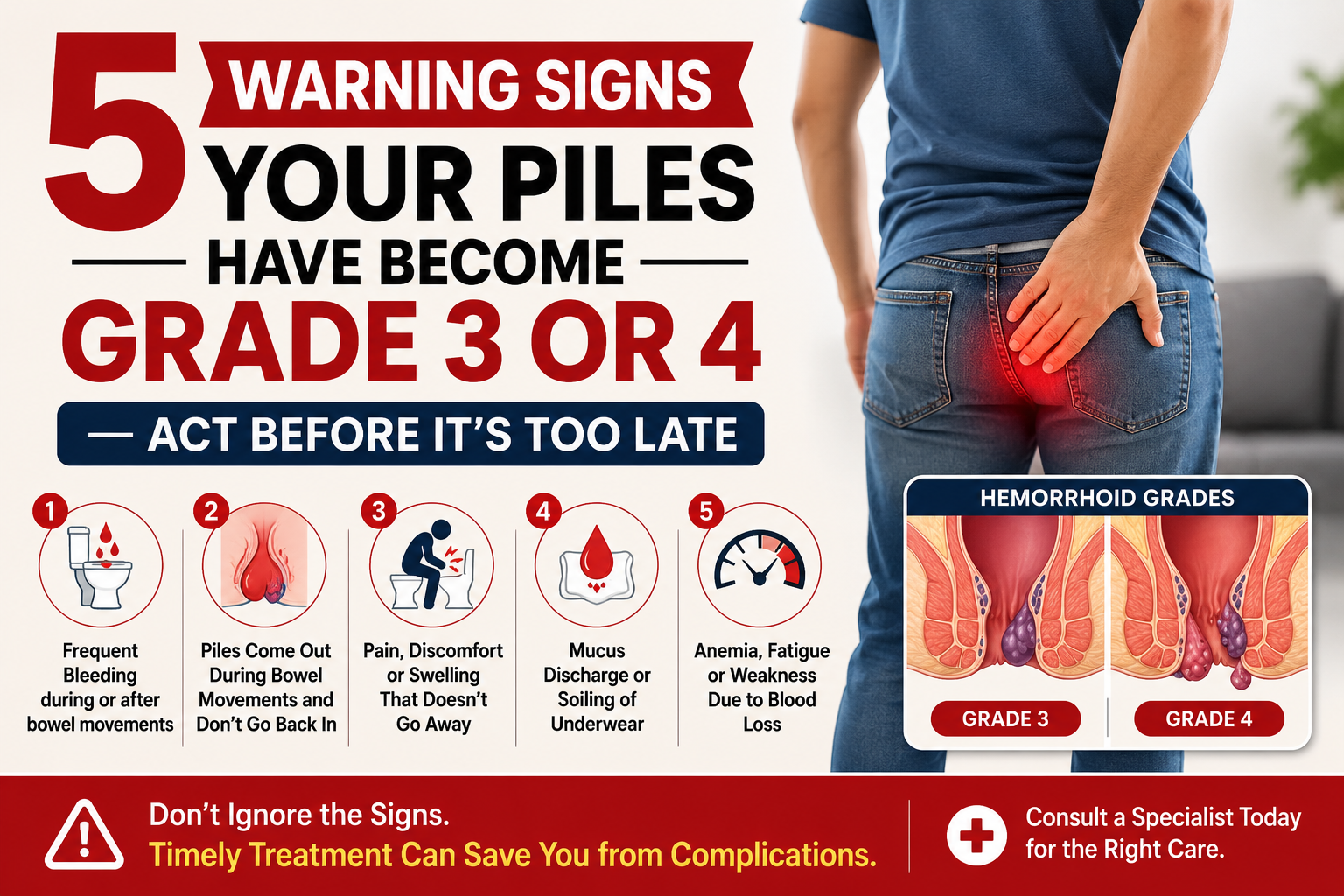
If you notice bright red rectal bleeding beyond post-operative day 3, inability to pass stools for 3 or more consecutive days, severe pain during or after a bowel movement, fever above 100.4°F, or any signs of wound discharge — contact Dr. Abhilash's Laparoscopy & Laser Clinics immediately at +91 99893 33814.
Long-Term Diet to Prevent Piles from Recurring
Piles surgery treats the existing problem. But haemorrhoids can and do recur if the underlying lifestyle habits that caused them remain unchanged. The best piles treatment in Hyderabad is one followed by permanent dietary improvement.
A high-fibre, well-hydrated diet consumed consistently is the single most evidence-supported intervention for preventing haemorrhoid recurrence. In practice, this means including whole grains at every meal such as ragi, oats, and whole wheat, eating two to three servings of cooked vegetables daily, choosing lentils and legumes over refined carbohydrates, drinking 2.5 litres of water every day, and limiting processed, fried, and ultra-refined foods long-term.
Regular physical activity also plays a critical role — 30 minutes of walking daily improves bowel regularity and reduces intra-abdominal pressure. Avoid sitting on the toilet for extended periods and never strain during a bowel movement. If stools become hard, address it immediately through diet and hydration before it escalates.
Regular follow-up consultations at Dr. Abhilash's Laparoscopy & Laser Clinics, Kondapur, Hyderabad are strongly recommended. Dr. Abhilash and the team assess wound healing progress, adjust dietary guidance as needed, and detect any early signs of recurrence before they require intervention.
Conclusion
1.Can I eat rice after piles surgery?
Yes. Soft, well-cooked white or brown rice is one of the safest staple foods during recovery from piles surgery. Avoid biryani, fried rice, or any rice dish cooked with excess spice and oil for at least the first four weeks after piles treatment.
2.How long should I follow the recovery diet after surgery?
The liquid to soft food phase covers days 1 to 14. A full high-fibre transition begins from week 3 onwards. However, a low-spice, high-fibre, high-hydration dietary pattern is ideally maintained permanently to prevent haemorrhoid recurrence — this is a core part of the long-term care protocol at our piles hospital in Hyderabad.
3.Is curd or yoghurt good after piles surgery?
Absolutely. Plain curd and buttermilk (chaas) are probiotic-rich, anti-inflammatory, and cooling. They support gut microbiome health and promote regular bowel movements without irritating the surgical site. They are among the most recommended foods for patients recovering from piles treatment in Hyderabad.
4.When can I eat non-vegetarian food after surgery?
Steamed fish and soft-boiled eggs can be introduced from day 4 or 5. Avoid red meat, mutton, and all fried preparations for at least 3 to 4 weeks. Lightly prepared chicken in a clear broth is acceptable from around day 10 to 14, subject to your surgeon's specific guidance.
5.What is the best natural stool softener after haemorrhoid surgery?
Isabgol (psyllium husk) — one teaspoon in a full glass of warm water at bedtime — is the most widely recommended natural stool softener by colorectal surgeons. Always consume it with adequate water and follow your doctor's prescription for any additional medicated stool softeners.
6.Is laser piles surgery at Dr. Abhilash's clinic a day-care procedure?
Yes. At Dr. Abhilash's Laparoscopy & Laser Clinics in Kondapur, Hyderabad, laser piles treatment is performed as a minimally invasive, same-day discharge procedure. Most patients return home within a few hours and resume light daily activity within 2 to 3 days.
About the Author
This article has been written and medically reviewed by Dr. Abhilash Nali — MBBS, DNB (General Surgery), FNB (Minimal Access Surgery), Consultant Laparoscopic & Laser Surgeon at Dr. Abhilash's Laparoscopy & Laser Clinics, Kondapur, Hyderabad. Dr. Abhilash secured All India Rank 1 in the FNB Entrance Examination (2018) and was awarded the PG Excellence Award at Sir Ganga Ram Hospital, New Delhi (2017).
For consultations, appointments, or any queries regarding piles treatment in Hyderabad, feel free to reach us at +91 99893 33814 or write to us at laparoscopyandlaserclinics@gmail.com
Disclaimer: This article is intended for general informational purposes only and does not constitute medical advice. Always follow the specific post-operative instructions provided by your treating surgeon.