
Understanding Inguinal Hernia
Understanding the symptoms, causes, and available treatment options is an important first step. Every patient is different, so the right treatment depends on individual symptoms and medical evaluation.
When Should You Consult a Doctor?
If symptoms continue, become severe, or start affecting your daily activities, it is important to consult a qualified medical professional for proper diagnosis and treatment.
For generations, medical illustrations and public health campaigns have subtly reinforced a common misconception: that hernias are an almost exclusively male health issue. When most people think of a hernia, they picture a man lifting heavy weights, followed by a sudden, visible bulge in the groin. Because of this persistent stereotype, thousands of women experiencing chronic pelvic discomfort, deep groin aches, or mysterious abdominal pain are left searching for answers. The reality is that hernias occur frequently in women, but they present entirely differently than they do in men. In female patients, these hernias are often smaller, deeper, and frequently hidden beneath layers of pelvic tissue, making them virtually invisible from the outside. Consequently, women in India—including right here in Hyderabad—frequently endure months or even years of misdiagnosis, bouncing between gynecologists, gastroenterologists, and physical therapists before finding the right surgical specialist. If you have been struggling with unexplained pelvic or groin pain, understanding how a female hernia presents is the first step toward getting the right treatment.
The Hidden Nature of Female Hernias
An abdominal wall or groin hernia occurs when an internal organ or fatty tissue pushes through a weakened spot in the surrounding muscle or connective tissue. While the mechanical definition is the same for everyone, the anatomy of the female pelvis alters how this condition manifests.
Men most commonly develop inguinal hernias because the testicles descend through the inguinal canal before birth, leaving a natural structural weakness. Women also possess an inguinal canal, although it is narrower and more compact compared to men. This passage contains the round ligament, which helps support the uterus.
Due to differences in female pelvic structure and anatomy, women are uniquely susceptible to specific types of structural weaknesses:
Femoral Hernias: These occur just below the groin crease, where the femoral artery and vein pass into the thigh. This pathway is naturally wider in women due to the shape of the female pelvis, making femoral hernias significantly more common in women than in men.
Umbilical Hernias: These develop right around the belly button, where the abdominal wall can become stretched, thinned, or compromised.
Incisional Hernias: These emerge through the scar tissue of a previous surgical site, such as a prior C-section, hysterectomy, or laparoscopic procedure, where the abdominal muscles never fully regained their original tensile strength.
The core challenge with female hernias—especially femoral hernias—is that they are often "occult" or hidden. They rarely produce a distinct, easily identifiable lump. Instead of an obvious protrusion, a woman might only experience a deep, burning, or aching sensation within the pelvic floor that intensifies during physical activity or prolonged standing.
Why Hernias are Frequently Misdiagnosed in Women
It is highly common for a female hernia to be misdiagnosed in India. When a woman presents with lower abdominal or pelvic discomfort, clinical protocols naturally lean toward investigating the reproductive and gastrointestinal systems first.
Because the symptoms of a hidden hernia mimic several common gynecological conditions, a patient's discomfort is often attributed to other causes. It is crucial to evaluate the distinct differences between a structural hernia and conditions like ovarian cysts:
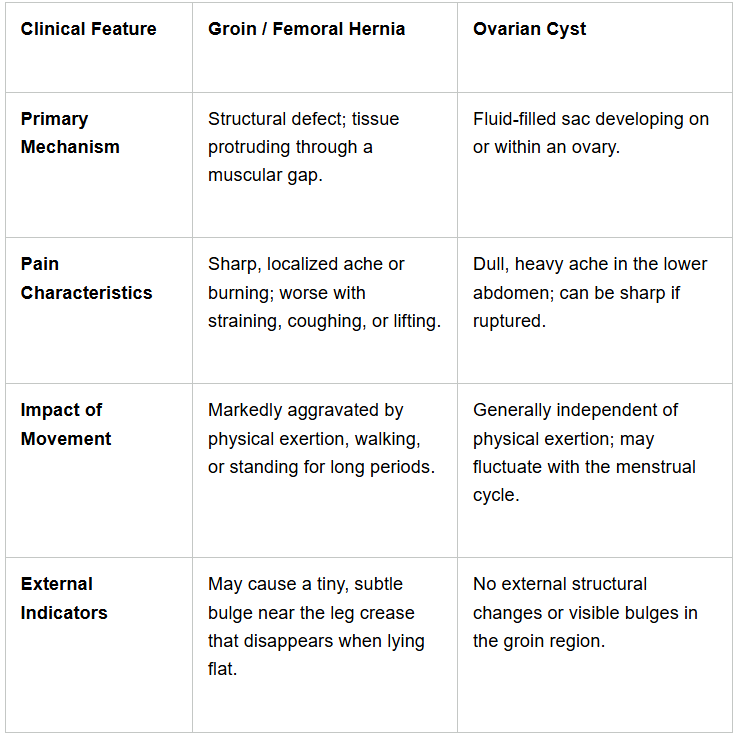
Beyond ovarian cysts, the complex web of female pelvic anatomy means that hernia symptoms are frequently mistaken for:
Endometriosis: Uterine-like tissue growing outside the uterus, causing severe cyclic pelvic pain.
Pelvic Inflammatory Disease (PID): An infection of the reproductive organs causing chronic pelvic discomfort.
Fibroids: Non-cancerous growths in the uterus that cause pelvic pressure and localized aching.
Chronic Groin Pain from Muscle Strain: A broad diagnosis given when routine pelvic ultrasounds fail to show abnormalities in the uterus or ovaries.
When a patient undergoes a standard pelvic ultrasound, the scan focuses directly on the uterus and ovaries. Because the ultrasound wand may not scan low enough into the femoral canal or groin creases, the structural defect of a hidden hernia is frequently missed, leaving the patient without a clear diagnosis.
Identifying the Signs of a Hernia in Women
Recognizing the subtle, gender-specific signs of a female hernia is vital for seeking timely medical intervention. Because these structural defects do not always present with a textbook bulge, you should pay close attention to how your body responds to daily physical stress.
1. Chronic, Unexplained Groin and Pelvic Pain
The most prevalent sign is a deep, localized ache in the groin area, lower abdomen, or deep within the labia. This discomfort is often described as a constant, heavy pressure or a sharp, pinching sensation that occurs during specific movements.
2. Pain Aggravated by Intra-Abdominal Pressure
Pay close attention to when the pain intensifies. Structural hernias are physically affected by any movement that increases internal pressure within your abdomen. If you notice a sharp spike in discomfort when coughing, sneezing, laughing, lifting a child, or straining during a bowel movement, it strongly points toward a hernia rather than a purely gynecological or muscular issue.
3. The "Disappearing" Discomfort
Because hernias involve tissue shifting through a muscular gap, gravity plays a significant role. Many women note that their groin pain or subtle swelling worsens as the day goes on—especially after standing, walking through the markets, or cooking for extended periods. Conversely, the pain often resolves or reduces significantly when lying completely flat, as the protruding tissue slips back through the defect.
4. Digestive Changes
For umbilical or femoral hernias, a small piece of the intestine can occasionally become lightly pinched. This can lead to unexplained bouts of nausea, localized bloating, or sudden changes in your bowel movements that don't seem to correlate with your diet.
Life Transitions: Umbilical Hernias After Pregnancy
Pregnancy is one of the most beautiful transformations a woman’s body can undergo, but it also places an immense amount of physical stress on the abdominal wall. As the uterus expands to accommodate a growing baby, the rectus abdominis muscles (the "six-pack" muscles) stretch to their absolute limit. This profound internal pressure can cause the midline connective tissue, known as the linea alba, to thin out and separate—a condition called diastasis recti.
This stretching frequently weakens the natural ring of muscle around the belly button, leading directly to an umbilical hernia after pregnancy.
[Pregnancy / Expanded Uterus]
│
▼
[Severe Stretching of Abdominal Wall]
│
▼
[Thinning of Midline Connective Tissue (Diastasis Recti)]
│
▼
[Weakened Umbilical Ring]
│
▼
[Umbilical Hernia (Tissue Protrusion at Belly Button)]
Many mothers notice a soft bulge near their belly button a few months postpartum, or find that their belly button has permanently changed from an "innie" to an "outie." While some minor muscle separations can heal with targeted pelvic floor physical therapy, a true umbilical hernia involves a physical tear or hole in the muscle layer. Muscle exercises cannot close a physical gap in the tissue; a lasting repair requires structural reinforcement to restore the integrity of your core.
When a Missing Diagnosis Becomes an Emergency
While living with chronic pelvic pain is exhausting, the primary reason surgical specialists urge a timely evaluation is to prevent dangerous clinical complications. When a piece of fat or intestine slips through a narrow muscular defect, it can become trapped. This is known as an incarcerated hernia.
If the muscular gap is tight, it can completely cut off the blood supply to the trapped tissue, leading to a strangulated hernia. A strangulated hernia is a severe, life-threatening medical emergency that cuts off blood flow to the bowel, requiring immediate surgical intervention to prevent tissue necrosis (cell death).
Because women are highly prone to femoral hernias, which have very narrow, rigid openings, their risk of developing a strangulated hernia is statistically much higher than it is for men.
Warning Signs of a Hernia Emergency
If you experience any of the following symptoms, do not wait for a clinic appointment. Go to the nearest emergency room immediately:
A sudden, severe, and unbearable spike in groin or abdominal pain.
A visible groin or umbilical bulge that suddenly turns red, purple, or dark.
A hernia bulge that becomes extremely tender to the touch and cannot be gently pushed back in while lying down.
Severe nausea, continuous vomiting, and an inability to pass gas or have a bowel movement.
Consulting a Dedicated Hernia Specialist in Hyderabad
If you have been managing persistent, unexplained pelvic pain or suspect an umbilical issue after childbirth, it is time to move past temporary fixes. Finding lasting relief requires consulting an experienced Hernia Specialist who understands the nuances of female anatomy.
When choosing a care provider, look for a dedicated hernia surgeon in hyderabad who prioritizes a comprehensive diagnostic approach. A thorough specialist won't rely solely on a standard ultrasound. If they suspect an occult female hernia, they will utilize targeted dynamic clinical examinations—assessing your abdomen while you stand and strain—or order dedicated high-resolution imaging like an MRI or a dynamic CT scan to visualize the hidden defect.
Getting a precise diagnosis ensures you receive a personalized treatment plan, helping you avoid unnecessary treatments and finally resolve the true source of your discomfort.
Modern Solutions: Advanced Hernia Treatment in Hyderabad
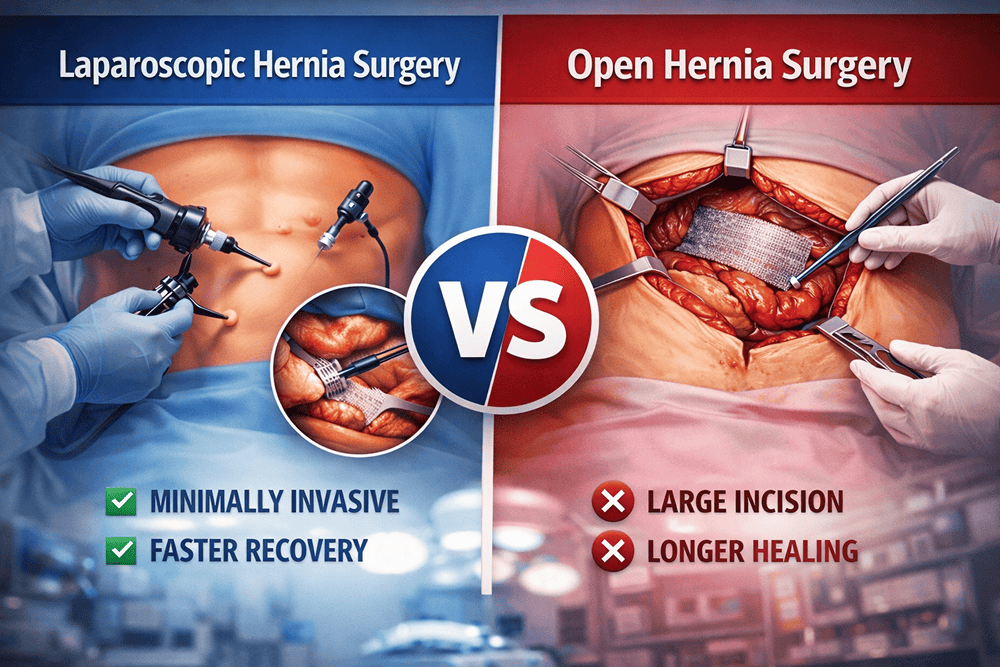
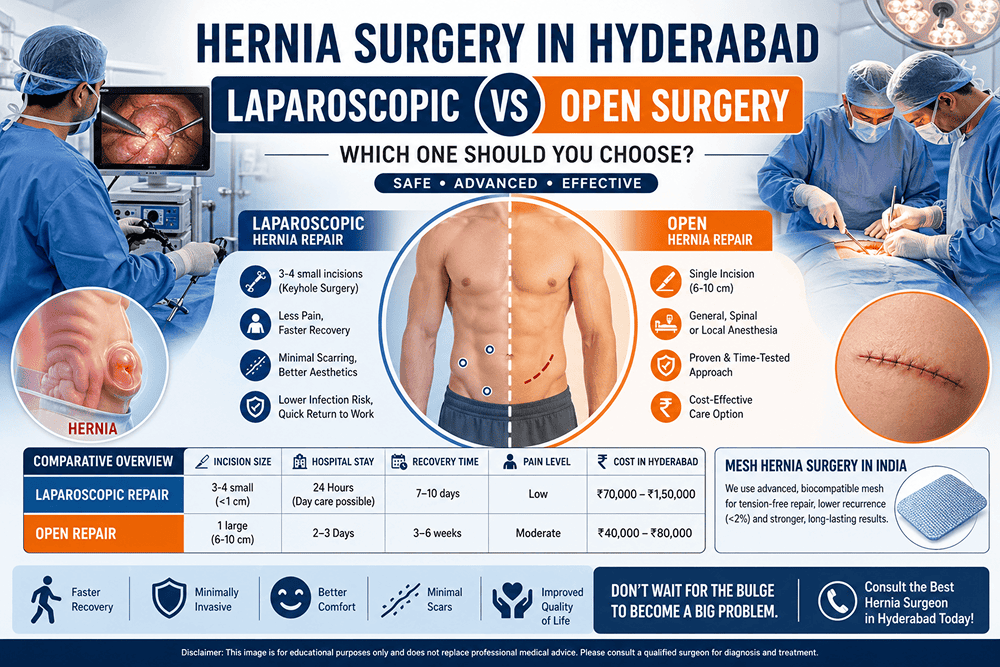
The definitive treatment for a structural hernia is surgical repair. Fortunately, modern surgical advancements have transformed this process, moving away from large, painful abdominal incisions toward ultra-precise, minimally invasive techniques.
For women seeking hernia treatment in hyderabad, advanced hospitals offer state-of-the-art options tailored for rapid recovery:
Laparoscopic Hernia Repair
Through 3 tiny, keyhole incisions measuring less than a centimeter, a skilled surgeon inserts a high-definition camera (laparoscope) and specialized micro-instruments. The surgeon operates by viewing a magnified, crystal-clear monitor, allowing them to precisely clear the hernia defect from the inside without cutting through outer pelvic muscles.
Robotic-Assisted Hernia Repair
Representing the highest tier of surgical precision, robotic systems grant the surgeon enhanced 3D visualization and an exceptional range of motion. This technique is particularly beneficial for complex incisional hernias following previous gynecological surgeries or for treating delicate femoral defects.
Advanced Mesh Technology
To ensure the repair lasts, modern surgeries utilize lightweight, biocompatible mesh. This specialized mesh acts as a supportive scaffolding over the weakness, integrating naturally with your body’s tissues over time to create a strong, flexible abdominal wall.
Benefits of Minimally Invasive Surgery
Choosing a minimally invasive approach offers significant benefits for your recovery and long-term health:
Minimal Scarring: Tiny incisions result in discrete, aesthetically minor scars, which is highly advantageous for post-pregnancy repairs or previous C-section sites.
Reduced Post-Operative Pain: Because abdominal and groin muscles are not cut or heavily disrupted, post-surgical pain is substantially lower.
Rapid Return to Daily Life: Most advanced laparoscopic and robotic repairs are performed as daycare or short-stay procedures. Patients are typically walking comfortably on the same day and can return to light professional activities within a week.
Patient Roadmap: From Symptoms to Recovery
Navigating healthcare decisions can feel overwhelming. If you suspect a hernia, following a structured pathway helps ensure you receive the precise care and accurate diagnosis you need.
1. Track Symptoms ────► Note if pelvic/groin pain worsens when standing, coughing, or lifting.
│
▼
2. Expert Consultation ─► Book an evaluation with a specialized hernia surgeon in Hyderabad.
│
▼
3. Targeted Imaging ───► Undergo dynamic physical exams or high-resolution MRI/CT scans.
│
▼
4. Tailored Procedure ──► Choose a customized, minimally invasive laparoscopic or robotic repair.
│
▼
5. Smooth Recovery ────► Return to light daily activities within days, backed by expert post-op care.
Conclusion
Frequently Asked Question (FAQ)
1. Can a female hernia be mistaken for an ovarian cyst?
Yes. Because hernias in women are often deep and rarely cause a visible outward lump, their symptoms frequently overlap with gynecological issues like ovarian cysts or endometriosis. A key differentiator is that hernia pain is structural: it typically worsens with physical exertion, standing, or coughing, and improves when lying flat.
2. Why do regular pelvic ultrasounds often miss a hidden hernia?
Standard pelvic ultrasounds focus exclusively on evaluating the uterus, ovaries, and bladder. They do not scan low enough into the groin or femoral creases where female hernias typically form. Furthermore, because hernias are dynamic, the protruding tissue often slips back inside while you are lying relaxed during a standard scan.
3. Is a postpartum belly button bulge always a hernia?
No. It could be diastasis recti, which is a stretching and widening of the midline abdominal muscles that can often be managed with physical therapy. However, if there is a distinct, localized, soft bulge right at the belly button that pops out when standing, it is likely an umbilical hernia (a physical tear in the muscle wall) which requires surgical repair.
4. What are the critical warning signs of a hernia emergency?
You should seek immediate emergency medical attention if your hernia bulge becomes locked in place and cannot be gently pushed back in while lying down, turns red, purple, or dark, or is accompanied by sudden, severe pain, nausea, vomiting, or an inability to pass gas or stool.
5. What is the typical recovery time after laparoscopic hernia surgery?
Because laparoscopic and robotic procedures use tiny keyhole incisions rather than cutting open major abdominal muscles, recovery is very efficient. Most patients are walking comfortably the same day and can return to desk work and light daily activities within 3 to 5 days. However, lifting objects heavier than 5 kg must be strictly avoided for 4 to 6 weeks.
Reclaim Your Comfort and Active Lifestyle
You do not have to live with unresolved pelvic pain, and your discomfort should never be dismissed as just an unidentifiable muscle strain. A structural issue requires a structural solution. By understanding the unique ways hernias present in women and seeking care from an expert, you can protect your long-term health and return to a life free from pain.
If you are looking for advanced diagnostics and specialized care, scheduling a consultation with Dr. Abhilash Nali at a leading healthcare facility in Hyderabad is a vital step forward. As an expert committed to thorough, patient-centric surgical care, Dr. Abhilash ensures that every patient receives a precise diagnosis and access to advanced, minimally invasive treatments designed for a smooth, rapid recovery.
Take control of your health today. Listen to your body, consult a trusted specialist, and take the definitive step toward reclaiming your comfort, strength, and peace of mind.
Disclaimer: This content is for educational purposes and should not replace professional medical advice. Please consult a qualified surgeon for a personalized diagnosis.