Understanding Inguinal Hernia
Understanding the symptoms, causes, and available treatment options is an important first step. Every patient is different, so the right treatment depends on individual symptoms and medical evaluation.
When Should You Consult a Doctor?
If symptoms continue, become severe, or start affecting your daily activities, it is important to consult a qualified medical professional for proper diagnosis and treatment.
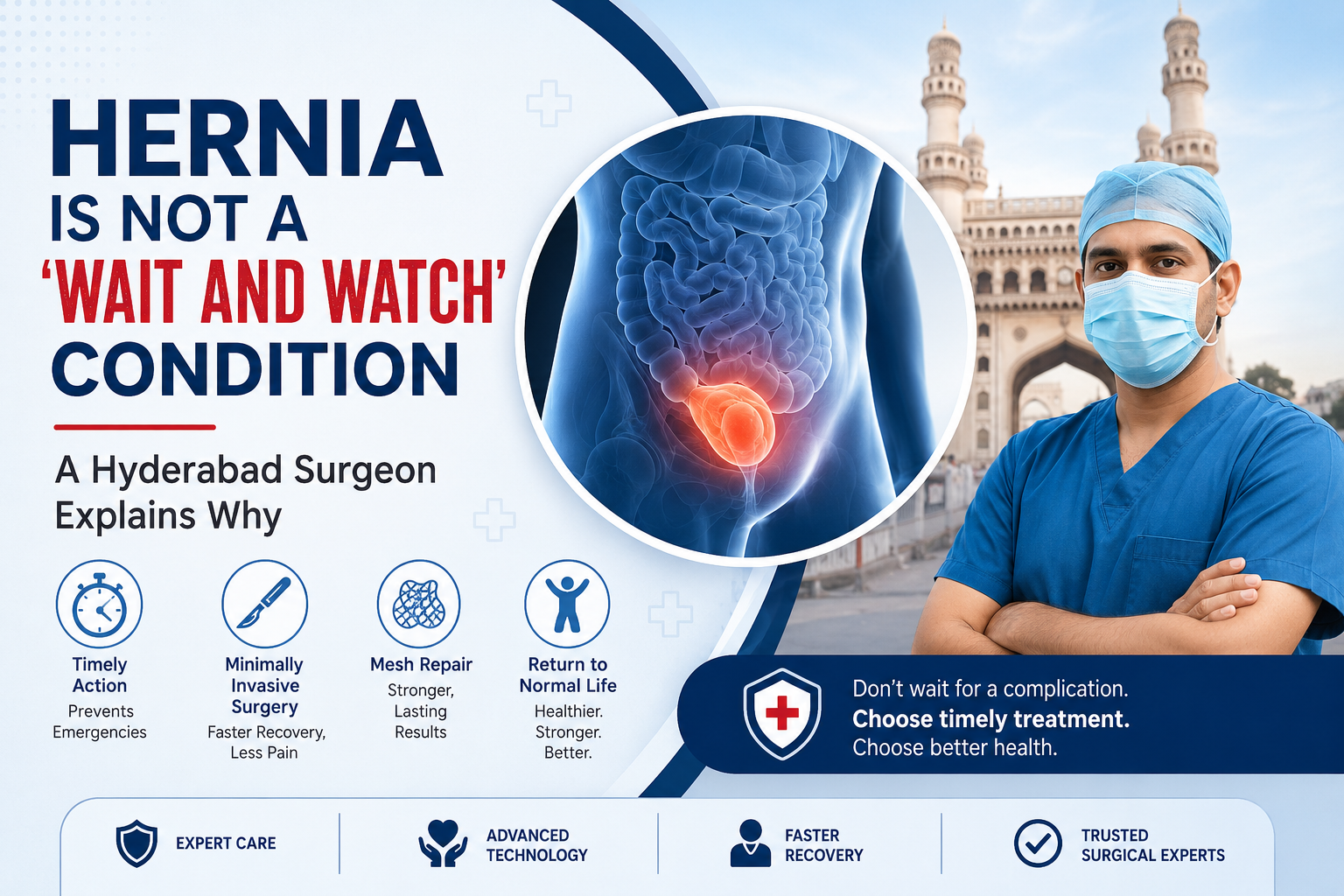
A hernia is often a silent companion. It begins as a small, perhaps painless, bulge noticed during a morning workout or while lifting a heavy object. Because it doesn’t always trigger immediate agony, many patients in Hyderabad adopt a "wait and watch" strategy. There is a common misconception that if it doesn't hurt, it isn't dangerous. However, as a hernia specialist, I must clarify a fundamental biological fact: An abdominal hernia is a mechanical defect—a physical hole in the muscle wall. Unlike a strain or a bruise, it possesses no physiological mechanism to heal itself. In this guide, we will explore why delaying hernia treatment in Hyderabad is a gamble with your long-term health and how modern surgical interventions have transformed recovery.
The Anatomy of a Defect: Why Hernias Are Persistent
To understand why "waiting" is ineffective, one must look at the abdominal architecture. The abdominal wall serves as a pressurized container for your internal organs. When a localized area of this wall weakens or tears, internal pressure forces fatty tissue or a loop of the intestine through the gap.
Common Variations in Indian Patients
Inguinal Hernia: Predominantly found in men, appearing in the groin area.
Umbilical Hernia: Centered around the navel, frequently seen in women post-pregnancy or individuals with sudden weight fluctuations.
Incisional Hernia: Arises at the site of a previous surgical scar where the tissue integrity was compromised.
Because this is a structural failure, no amount of medication, abdominal belts, or "rest" can close the gap. In fact, gravity and daily movement gradually expand the hole over time.
The Escalation: From Discomfort to Emergency
The danger of a hernia lies in its unpredictability. A "reducible" hernia (one that can be pushed back in) can transition into a surgical emergency without warning.
1. Incarceration: The Point of No Return
An incarcerated hernia occurs when the protruding tissue becomes trapped outside the abdominal wall. At this stage, the bulge becomes firm and cannot be pushed back. While not always immediately fatal, it is the final warning sign before a crisis.
2. Strangulation: A Critical Medical Emergency
This is the most significant risk of untreated hernias. When the opening constricts the trapped tissue so tightly that blood flow is cut off, the tissue begins to die (ischemia).
The Window of Action: Once strangulation occurs, the patient has a very narrow window (usually hours) before the trapped intestine becomes gangrenous.
The Consequence: What could have been a simple, planned procedure becomes a complex emergency surgery involving bowel resection and a significantly higher risk of infection.
3. Progressive Muscle Weakness
The longer a hernia exists, the larger the "ring" or hole becomes. A larger defect requires a more extensive mesh for reinforcement and can lead to a loss of abdominal wall function, affecting your posture and core strength.
Recognizing "Red Flag" Symptoms
While seeking a consultation with the best hernia doctor in Hyderabad is recommended at the first sign of a bulge, you must be aware of hernia emergency symptoms that require immediate ER visits:
Sudden, excruciating pain that radiates from the bulge.
A hernia that becomes dark, red, or purple.
Persistent vomiting and inability to pass gas (signs of bowel obstruction).
High fever and localized heat at the site of the bulge.
Modern Solutions: The Shift to Minimally Invasive Care
The primary reason patients avoid surgery is the fear of a long, painful recovery. However, the best hernia surgeon in Hyderabad now utilizes techniques that prioritize rapid return to daily life.
Laparoscopic Hernia Repair (Keyhole Surgery)
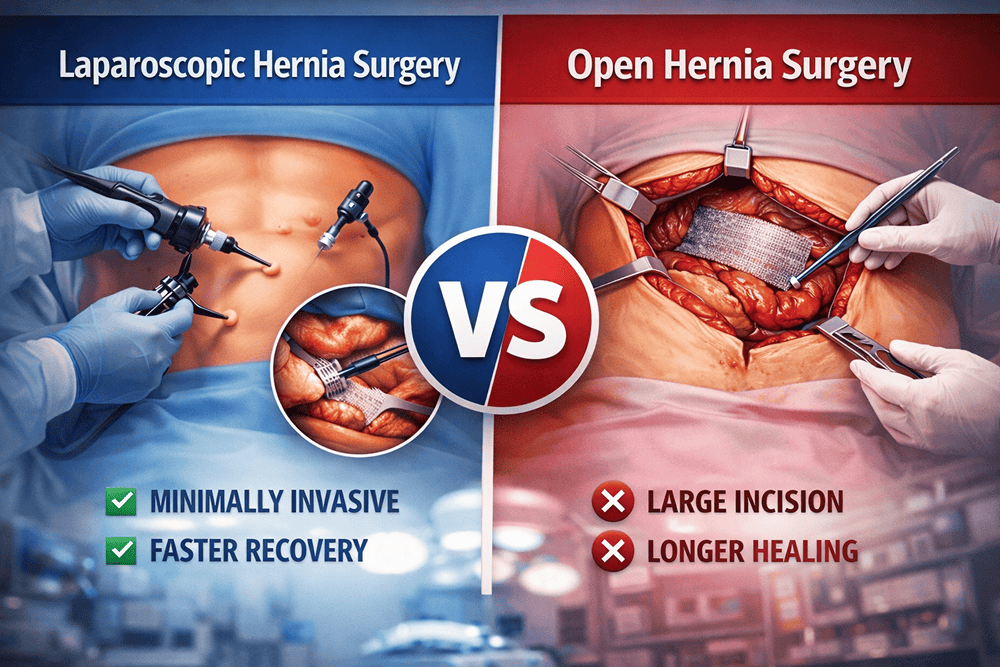
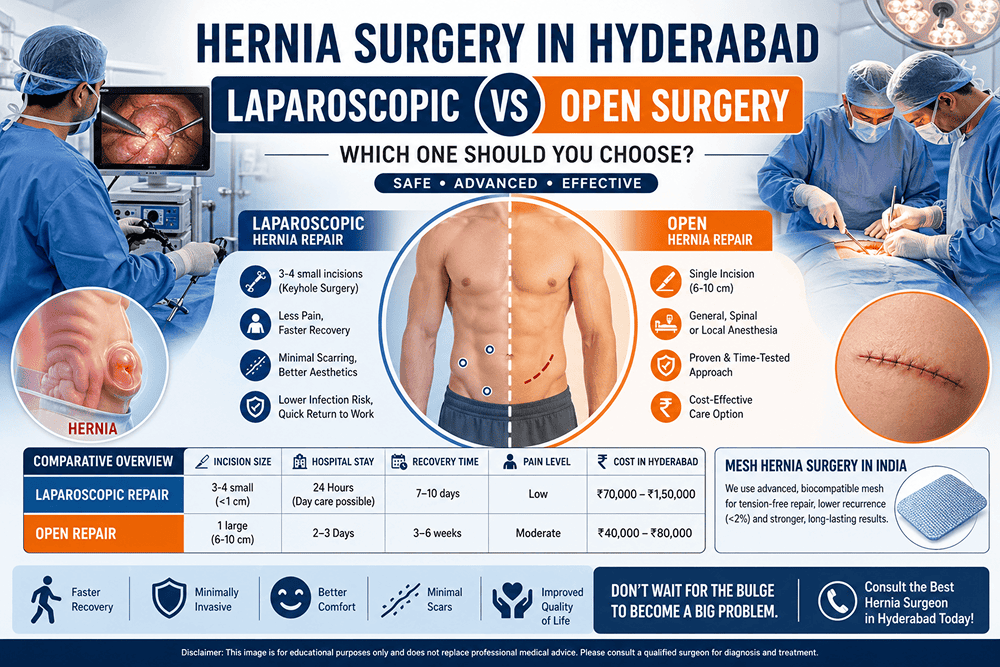
Unlike traditional open surgery that requires a large incision, laparoscopic repair uses three tiny incisions (often less than 1 cm).
Precision Mesh Placement: A medical-grade, biocompatible mesh is placed behind the defect, acting as a permanent scaffold for your natural tissue to reinforce.
Reduced Trauma: Minimal disruption to the skin and nerves means significantly less post-operative pain.
Speed of Recovery: Most patients are discharged within 24–48 hours and can resume sedentary work within a week.
Robotic-Assisted Surgery
For complex or recurrent hernias, robotic platforms provide surgeons with 3D visualization and unmatched dexterity, allowing for precise repairs in difficult anatomical spaces.
Why Expert Consultation Matters in Hyderabad
When searching for a hernia specialist in Hyderabad, it is vital to choose a facility that emphasizes EEAT (Expertise, Authoritativeness, and Trustworthiness). A professional surgical evaluation involves:
Clinical Assessment: Determining the size and contents of the hernia sac.
Imaging: Using ultrasound or CT scans to map the abdominal wall if the hernia is internal or complex.
Risk Stratification: Assessing the patient’s lifestyle and comorbidities to choose the safest surgical approach.
Life After Hernia Surgery: Preventing Recurrence
Surgery fixes the defect, but lifestyle maintenance protects the repair. To ensure long-term success:
Manage Chronic Coughs: Conditions like smoker's cough or asthma put immense strain on the repair.
Nutrition: A high-fiber diet prevents constipation and "straining" during bowel movements.
Weight Control: Reducing visceral fat lowers the internal pressure on the abdominal wall.
Safe Lifting: Always use your legs and maintain a neutral spine when lifting objects.
Conclusion: Take Control of Your Health
A hernia is a manageable condition when addressed proactively, but it is a dangerous one when ignored. The "wait and watch" approach often leads to a "wait and suffer" outcome. By choosing timely hernia treatment in Hyderabad, you avoid the risks of strangulation and ensure a faster, smoother recovery.
Don't wait for a complication to force your hand. Contact a specialist today to discuss a permanent solution for your hernia.
Conclusion
Frequently Asked Questions
Q: Can a hernia be cured without surgery?
No. There are no exercises or medications that can repair the physical hole in the abdominal wall. Surgery is the only definitive treatment.
Q: Is it safe to wear a hernia belt?
A belt (truss) may provide temporary symptomatic relief by holding the bulge in, but it does not treat the condition and can sometimes cause skin irritation or hide the progression of the hernia.
Q: What is the cost of hernia treatment in Hyderabad?
Costs vary depending on the surgical approach (Laparoscopic vs. Open) and the hospital's facilities. However, most laparoscopic procedures are covered by health insurance as they are medically necessary.
Q: How long is the recovery after laparoscopic hernia surgery?
Most patients return to light activities in 3–5 days. Heavy lifting and intense exercise are typically avoided for 4–6 weeks to allow the mesh to integrate fully.
Disclaimer: This content is for educational purposes and should not replace professional medical advice. Please consult a qualified surgeon for a personalized diagnosis.