Understanding Weight Loss
Understanding the symptoms, causes, and available treatment options is an important first step. Every patient is different, so the right treatment depends on individual symptoms and medical evaluation.
When Should You Consult a Doctor?
If symptoms continue, become severe, or start affecting your daily activities, it is important to consult a qualified medical professional for proper diagnosis and treatment.
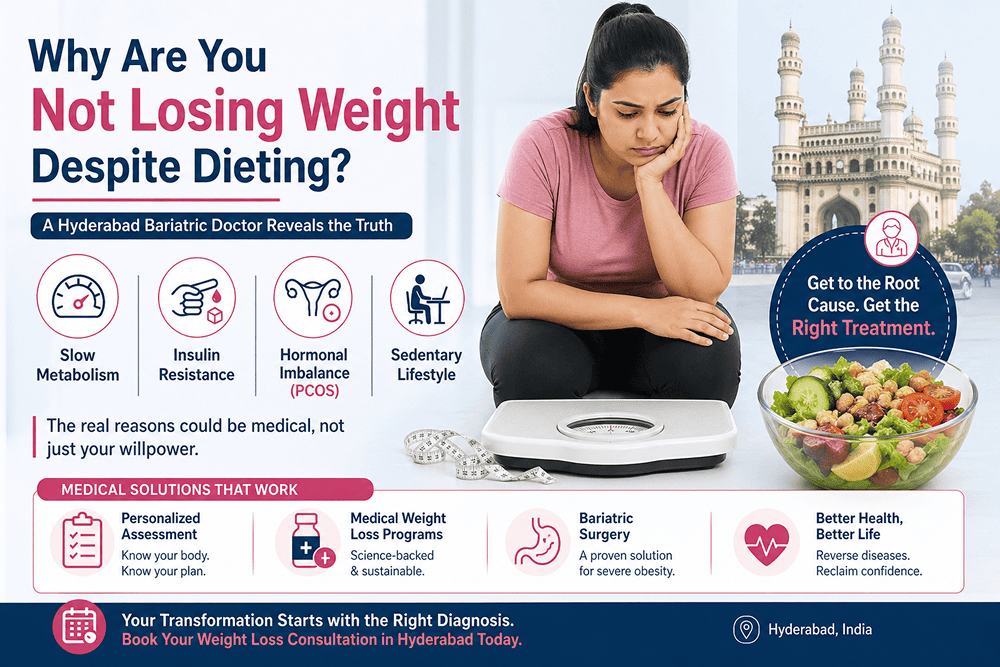
Are you hitting the gym at HITEC City every morning, skipping your favorite Hyderabadi biryani, and living on salads, yet the scale refuses to budge? You aren't alone. In Hyderabad, nearly 70% of professionals in the IT sector struggle with overweight or obesity issues. Many feel trapped in a cycle of "eat less, move more" that simply doesn't deliver results. If you’ve been asking yourself, "Why am I not losing weight?", the answer might not be your lack of willpower. It might be your biology. As a weight loss doctor in Hyderabad, I see patients daily who are doing "everything right" but fighting an uphill battle against their own metabolism. In this guide, we will explore the medical reasons behind weight loss plateaus and how a structured weight loss program in Hyderabad can help you break through.
1. The "Starvation Mode" Myth: Why Undereating Backfires
One of the most common mistakes people make is drastic calorie restriction. When you consume too few calories, your body enters a protective state often called "adaptive thermogenesis."
The Science: Your metabolism slows down to preserve energy.
The Result: You feel exhausted, your cravings increase, and your weight stays the same.
The Solution: Instead of starving, focus on nutrient density. A professional weight loss consultation in Hyderabad can help determine your Basal Metabolic Rate (BMR) so you eat enough to fuel your body while still losing fat.
2. Insulin Resistance: The Silent Weight Gain Driver in India
India is often called the "Diabetes Capital," but the precursor—Insulin Resistance—is the real culprit behind stubborn belly fat. When your cells stop responding to insulin, your body stores sugar as fat instead of using it for energy.
For many in Hyderabad, a diet high in refined carbohydrates (white rice, maida) combined with a sedentary lifestyle leads to chronic insulin spikes. If you have insulin resistance, no amount of traditional dieting will work until your hormone levels are managed medically.
3. Hormonal Imbalance: PCOS and Beyond
For women aged 25–45, PCOS (Polycystic Ovary Syndrome) is a leading cause of weight gain. In fact, PCOS weight gain treatment in Hyderabad is one of our most requested services.
Hormonal Weight Gain in Women: High levels of androgens and cortisol (the stress hormone) make it physically harder to burn fat.
The Metabolic Connection: PCOS often goes hand-in-hand with metabolic disorders, making it a medical issue rather than a lifestyle one.
4. The "Sedentary Professional" Syndrome
Hyderabad’s workforce is largely desk-bound. Sitting for more than 8 hours a day—common in areas like Gachibowli and Madhapur—changes how your body processes fats and sugars. This leads to Metabolic Syndrome, a cluster of conditions including high blood pressure and increased waist circumference.
When is it Time to See a Weight Loss Doctor?
If your BMI is over 30, or if you have co-morbidities like Type 2 Diabetes or Hypertension, "DIY" weight loss may no longer be effective. This is where the expertise of the best doctor for obesity in Hyderabad becomes essential.
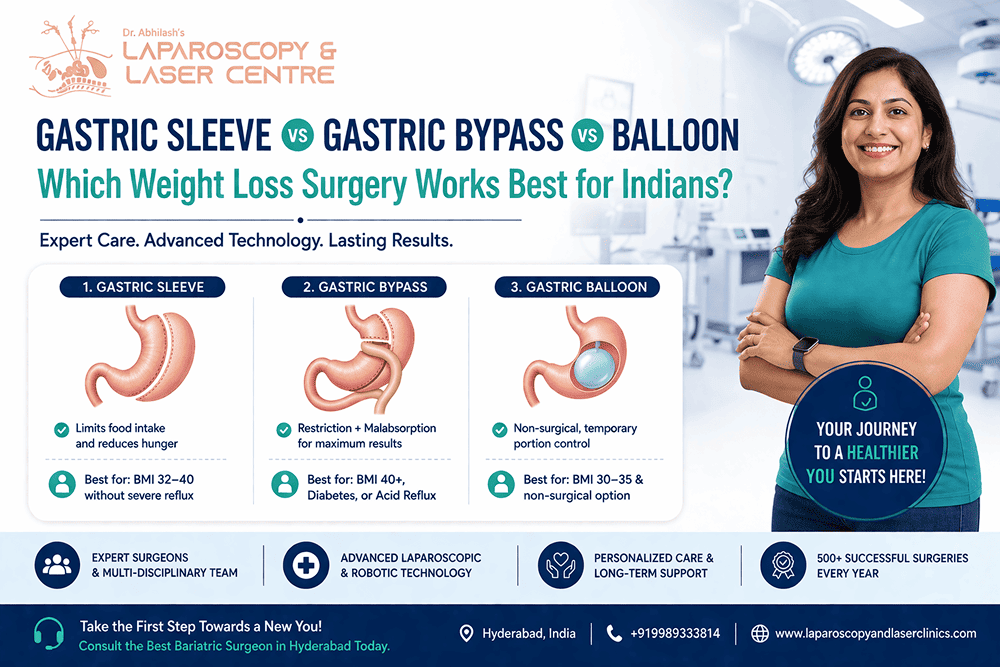
Medical vs. Surgical Weight Loss: Which is Right for You?
At our clinic, we believe in a tiered approach. Not everyone needs surgery, but everyone needs a plan.
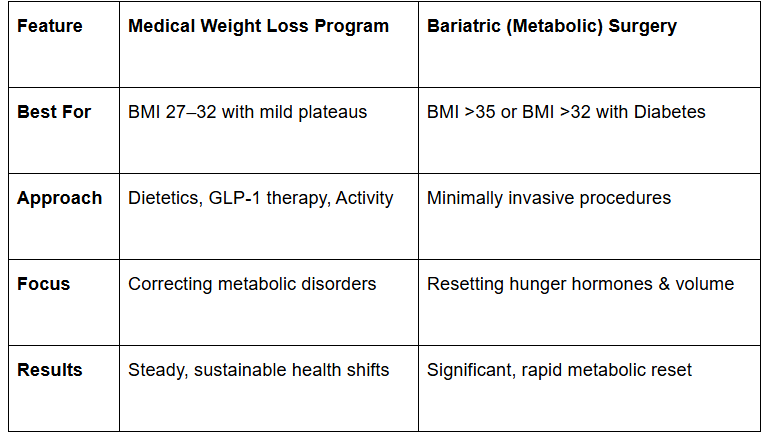
Seeking the best doctor for weight loss in Hyderabad ensures you get a diagnosis first, not just a diet chart. We use advanced diagnostics to check for thyroid imbalances, vitamin deficiencies (like Vitamin D and B12, which are chronically low in urban Indians), and gut microbiome health.
Practical Steps to Break Your Weight Loss Plateau
Prioritize Protein & Fiber: Move away from "white" carbs. Incorporate sprouts, lean proteins, and local seasonal vegetables to keep insulin levels stable.
NEAT (Non-Exercise Activity Thermogenesis): If you work in IT, use a standing desk or take 5-minute walks every hour. This burns more calories over time than a single hour at the gym.
Sleep Hygiene: Lack of sleep (less than 7 hours) increases Ghrelin—the hunger hormone—and decreases Leptin—the fullness hormone.
Get Tested: Stop guessing. A simple blood panel can reveal if metabolic disorder weight gain is the reason your "healthy" habits aren't working.
Expert Insight: Is Bariatric Surgery "The Easy Way Out"?
As a bariatric specialist, I often hear this myth. The truth is, bariatric surgery is a metabolic reset. It changes the signals between your gut and your brain, making it possible for your body to finally "let go" of stored fat. It is a tool that works in tandem with a healthy lifestyle, not a replacement for it.
For those who have struggled for years, it is often the only way to achieve long-term remission from obesity-related diseases.
Conclusion
Frequently Asked Questions (FAQs)
1. Why can’t I lose weight even with regular exercise and a strict diet?
In many cases, stubborn weight gain is a medical issue rather than a lifestyle one. Conditions common in the Indian population, such as Insulin Resistance, Hypothyroidism, or PCOS, create a metabolic "lock" that prevents the body from burning stored fat. When your hormones are imbalanced, your body may actually prioritize storing fat even when you are in a calorie deficit. A clinical evaluation can help identify these hidden roadblocks.
2. Is bariatric surgery the only option if diets have failed me?
Not at all. Bariatric surgery is a powerful tool for those with severe obesity (typically a BMI over 35-40), but many patients find success through a medically supervised weight loss program in Hyderabad. These programs combine advanced metabolic medications (like GLP-1 therapy), specialized nutritional counseling, and hormonal correction to help you lose weight without surgery.
3. How much weight can I realistically lose with a professional weight loss program?
Results vary based on your starting weight and metabolic health. Generally, patients in a structured medical program can expect to lose 5% to 15% of their body weight over 6–12 months. For those undergoing bariatric surgery, weight loss can be significantly higher—often 60% to 80% of excess body weight within the first year. The goal is always sustainable health, not just a number on the scale.
4. Does health insurance in India cover bariatric surgery or weight loss treatments?
Since 2019, the IRDAI has mandated that bariatric surgery be covered under health insurance policies in India if it is performed for life-saving medical reasons (such as morbid obesity with comorbidities like heart disease or severe diabetes). Coverage for non-surgical weight loss programs varies by provider. We recommend checking with our billing department for a pre-authorization check.
5. Will I regain the weight after I stop the program or after surgery?
Obesity is a chronic condition, much like hypertension. To prevent weight regain, it is essential to follow a long-term maintenance plan. Our programs focus on behavioral counseling and "metabolic resetting" to help your body maintain its new, lower weight set-point. Regular follow-ups with the best doctor for weight loss in Hyderabad ensure that any minor weight fluctuations are addressed before they become permanent.
Conclusion: Your Weight is Not Your Worth
Weight loss is a medical journey, not a moral one. If you are struggling despite your best efforts, it is time to stop blaming yourself and start looking at the science. Whether you need a structured weight loss program in Hyderabad or are exploring advanced metabolic treatments, help is available.
Ready to uncover the truth about your metabolism?
Book a comprehensive weight loss consultation in Hyderabad today. Let’s move past the myths and find a solution that works for your body.
Medical Disclaimer: This blog is for informational purposes only and does not substitute professional medical advice. Always consult with a qualified healthcare provider for diagnosis and treatment.